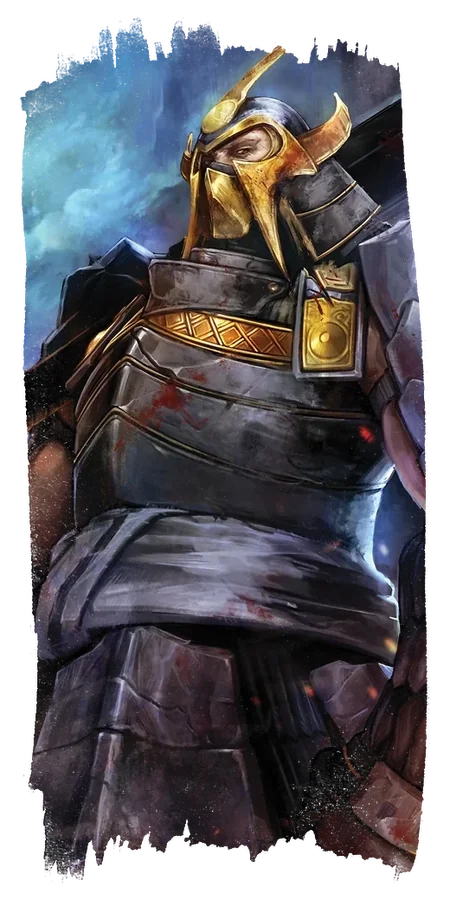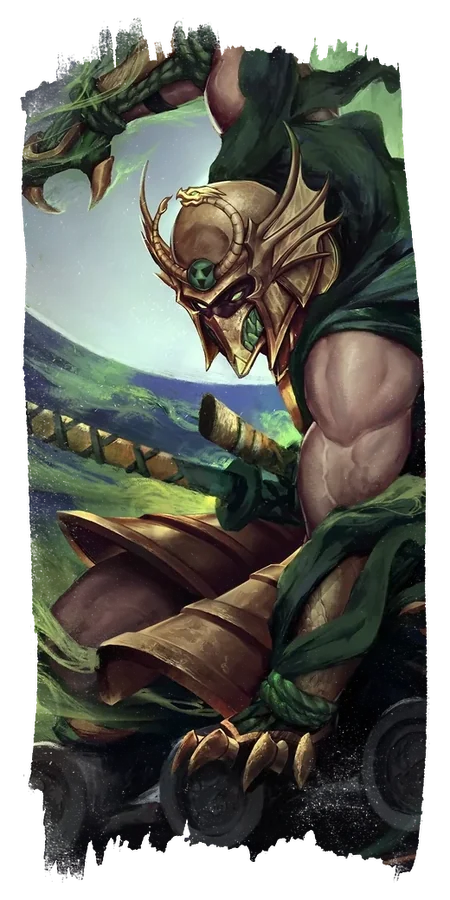
Crab
The Wall. Attrition, economy, and the willingness to spend people.
Who they are
Founded by the Kami Hida, the Crab hold the Carpenter Wall along Rokugan's southern border, the only thing standing between the Empire and the Shadowlands — the blighted realm ruled by the fallen Kami Fu Leng. Their sworn duty is to keep it standing, and everything about the clan follows from that.
Five families divide the work. The Hida garrison the Wall and fight what comes over it. The Hiruma scout, raid and carry warnings from beyond it. The Kaiu engineer and maintain it. The Kuni are witch hunters and shugenja who study the taint closely enough to be feared by their own side. The Yasuki — merchants who defected from the Crane centuries ago, sparking a war the Crane have not forgotten — keep the supply lines fed.
The official telling is blunt about how the rest of the Empire sees them: impolite brutes, too pigheaded for the niceties of court. The Crab answer that they turn their backs on the court so they can face the real enemy, and that a single gap in the Wall costs more lives than a season of bad manners.
Crab are the clan that does not care about being liked. They hold the Kaiu Wall against the Shadowlands, and their card pool is built around the arithmetic of that job: bodies are cheap, bodies are expendable, and the wall must not fall.
Mechanically this makes them the game's attrition clan. Way of the Crab bows a character outright. The Mountain Does Not Fall turns a losing defence into a win. Funeral Pyre converts your own casualties into fate. The through-line is that Crab are content to trade one-for-one all game, because their engine refills faster than yours does.
The economy nobody talks about
The primer at Off Meta Musings makes a point worth repeating: Crab's reputation is defensive muscle, but what actually holds their decks together is economy. Kaiu Envoy, Shrewd Yasuki, Gallant Quartermaster and Funeral Pyre show up in most Crab lists regardless of archetype. Several of them, notably Shrewd Yasuki and Hida Guardian, want a holding in play — which is why Crab run more holdings than most clans, and why Rebuild is arguably their most theme-defining card. It was restricted in December 2018 and stayed there.
Strengths
- Cheap, resilient defenders and the best province-holding tools in the game
- Real economy: fate from death, fate from holdings, discounts on their own casualties
- Hida Kisada and the big Hida line give them credible late-game military
- Almost no reliance on splashes, which makes them forgiving to build
Weaknesses
- Political skill is thin and often absent entirely
- Slow starts against a clan that can win before the engine turns over
- Vulnerable to attachment control stripping the tools that make small bodies work
- Their honour tends to drift downward, which some of their own cards then punish
How they changed
Core Crab is a defensive brick: sit behind Defend the Wall and let the opponent come. The Imperial Cycle gave them Yasuki Taka and a genuine fate engine. The Elemental Cycle handed them Earth shugenja and Kuni Yori, leaning into a magical identity that never quite became dominant.
Then Defenders of Rokugan arrived in late 2019 with the Kaiu Wall holdings — six unique holdings, each buffing a province. It is the most flavourful thing FFG printed for the clan, and it is a trap. Community testing settled on running about four, because every wall holding you add is a character you do not see during the dynasty phase. Our showcase archive runs all six on purpose, and it is a slower, stranger, more thematic deck for it.
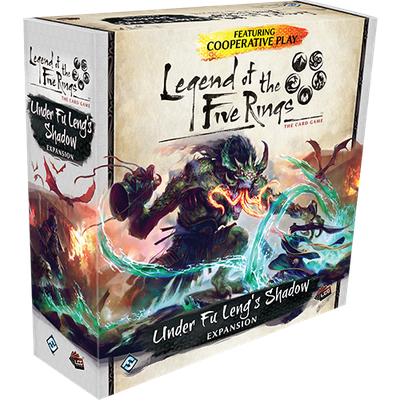
The late game brought a genuinely nasty Crab: Hida Yakamo and the Damned, characters that get better as your honour falls, and finally the Corrupted mechanics of Under Fu Leng's Shadow, where the Wall's defenders start becoming the thing they were built to keep out. It is the best long-form storytelling in the game's card design.
If you are building one
Decide early whether you are the wall or the hammer. The two Crab plans — grind them out behind provinces, or attack relentlessly while less honourable than your opponent — pull in opposite directions, and decks that try both do neither. Then count your holdings. Crab decks fail far more often from a clogged dynasty row than from a lost conflict.