The Archive

Scroll
Clan profile

Crab

The Wall. Attrition, economy, and the willingness to spend people.

Who they are

Founded by the Kami Hida, the Crab hold the Carpenter Wall along Rokugan's southern border, the only thing standing between the Empire and the Shadowlands — the blighted realm ruled by the fallen Kami Fu Leng. Their sworn duty is to keep it standing, and everything about the clan follows from that.

Five families divide the work. The Hida garrison the Wall and fight what comes over it. The Hiruma scout, raid and carry warnings from beyond it. The Kaiu engineer and maintain it. The Kuni are witch hunters and shugenja who study the taint closely enough to be feared by their own side. The Yasuki — merchants who defected from the Crane centuries ago, sparking a war the Crane have not forgotten — keep the supply lines fed.

The official telling is blunt about how the rest of the Empire sees them: impolite brutes, too pigheaded for the niceties of court. The Crab answer that they turn their backs on the court so they can face the real enemy, and that a single gap in the Wall costs more lives than a season of bad manners.

Crab are the clan that does not care about being liked. They hold the Kaiu Wall against the Shadowlands, and their card pool is built around the arithmetic of that job: bodies are cheap, bodies are expendable, and the wall must not fall.

Mechanically this makes them the game's attrition clan. Way of the Crab bows a character outright. The Mountain Does Not Fall turns a losing defence into a win. Funeral Pyre converts your own casualties into fate. The through-line is that Crab are content to trade one-for-one all game, because their engine refills faster than yours does.

The economy nobody talks about

The primer at Off Meta Musings makes a point worth repeating: Crab's reputation is defensive muscle, but what actually holds their decks together is economy. Kaiu Envoy, Shrewd Yasuki, Gallant Quartermaster and Funeral Pyre show up in most Crab lists regardless of archetype. Several of them, notably Shrewd Yasuki and Hida Guardian, want a holding in play — which is why Crab run more holdings than most clans, and why Rebuild is arguably their most theme-defining card. It was restricted in December 2018 and stayed there.

Strengths

  • Cheap, resilient defenders and the best province-holding tools in the game
  • Real economy: fate from death, fate from holdings, discounts on their own casualties
  • Hida Kisada and the big Hida line give them credible late-game military
  • Almost no reliance on splashes, which makes them forgiving to build

Weaknesses

  • Political skill is thin and often absent entirely
  • Slow starts against a clan that can win before the engine turns over
  • Vulnerable to attachment control stripping the tools that make small bodies work
  • Their honour tends to drift downward, which some of their own cards then punish

How they changed

Core Crab is a defensive brick: sit behind Defend the Wall and let the opponent come. The Imperial Cycle gave them Yasuki Taka and a genuine fate engine. The Elemental Cycle handed them Earth shugenja and Kuni Yori, leaning into a magical identity that never quite became dominant.

Then Defenders of Rokugan arrived in late 2019 with the Kaiu Wall holdings — six unique holdings, each buffing a province. It is the most flavourful thing FFG printed for the clan, and it is a trap. Community testing settled on running about four, because every wall holding you add is a character you do not see during the dynasty phase. Our showcase archive runs all six on purpose, and it is a slower, stranger, more thematic deck for it.

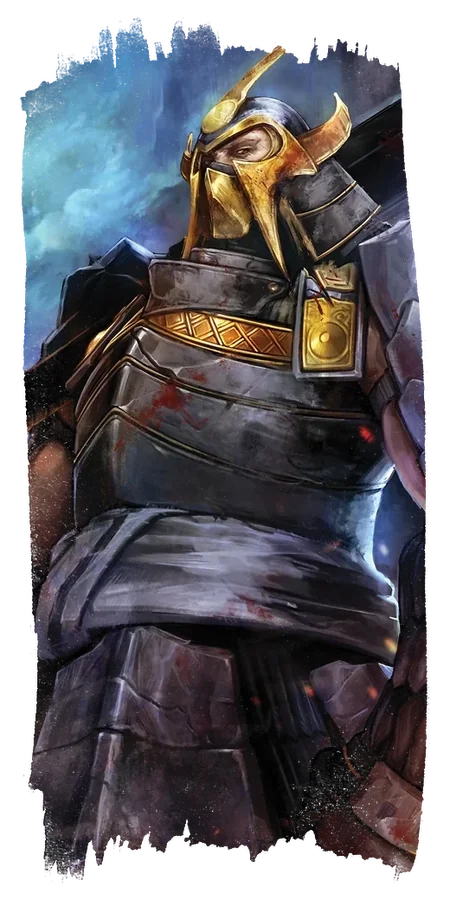
The late game brought a genuinely nasty Crab: Hida Yakamo and the Damned, characters that get better as your honour falls, and finally the Corrupted mechanics of Under Fu Leng's Shadow, where the Wall's defenders start becoming the thing they were built to keep out. It is the best long-form storytelling in the game's card design.

If you are building one

Decide early whether you are the wall or the hammer. The two Crab plans — grind them out behind provinces, or attack relentlessly while less honourable than your opponent — pull in opposite directions, and decks that try both do neither. Then count your holdings. Crab decks fail far more often from a clogged dynasty row than from a lost conflict.
Sources. Aytan's Crab primer at Off Meta Musings (2020); the Emerald Dojo's Crab guides; card and Banned & Restricted data from the archive database. Setting material drawn from Asmodee's official Legend of the Five Rings clan pages and the L5R wikis.
Keep scrolling
Clan profile

Crane

Court, duels, and the quiet violence of perfect manners.

Who they are

The Kami Doji taught Rokugan its arts, its etiquette and its laws, and the clan she founded has been the Emperor's left hand ever since — the voice of the courts, as the Lion are the fist of the armies.

The Doji are the courtiers and the clan's ruling family. The Kakita produced the duelling schools that made Crane blades the standard against which all others are measured. The Asahina are shugenja and artisans with a pacifist streak that sits oddly in a clan so associated with killing. And the Daidoji — the Iron Warriors — do the pragmatic, unglamorous work the Crane's reputation depends on not seeing.

Courtesy is the Crane virtue, and it is worth understanding as they do: not politeness, but the discipline of making every interaction serve a purpose. A Crane at court is working. So is a Crane at a tea ceremony.

Crane hold the Emperor's left hand: the courts, the arts, and the duel. They are the clan of honour as a weapon rather than a virtue, and their card pool is unusually coherent about it.

Two cards define them. Voice of Honor cancels an opponent's event outright if you are more honourable, and the Emerald Dojo's primer describes it as expected at three copies in essentially every competitive Crane deck. Way of the Crane exists largely to make sure the honour condition is met when you need it. Together they mean a Crane player is always holding a threat, and a good one makes you feel it without ever playing the card.

The duel as a win condition

Masters of the Court, the 2019 clan pack, turned duelling from flavour into an engine. Kyūden Kakita honours a character every time you win a duel. Kakita Toshimoko duels on arrival. Iaijutsu Master and Kakita Blade make the duel a fight you have already won before it starts. Toshimoko was eventually restricted, which is as good a review of the archetype as any.

The subtlety is that Crane duels are rarely about killing the character. They are about bowing it, sending it home, or forcing an honour bid that wrecks the opponent's draw. A Crane player who duels to kill is usually a Crane player having a bad game.

Strengths

  • The best cancel in the game, and the honour engine to switch it on
  • Duels that convert a small skill advantage into total board control
  • Deep political characters, from Doji Whisperer up to Doji Hotaru
  • Genuine access to the honour victory, which forces opponents to race

Weaknesses

  • Military is real but narrow; they win fights they have prepared, not fights they stumble into
  • Heavily reliant on being more honourable, which dishonour decks attack directly
  • Expensive characters and a slow clock against aggressive military
  • Their best cards are answers, and answers are dead when you are already behind

The house divided

The most interesting thing about Crane over the game's life is the story. Doji Hotaru and Doji Kuwanan are siblings contesting the clan, and their cards discard each other on sight. It is design where the flavour and the rules text say the same thing, and the 2019 releases are full of it — Conflict Between Kin, Kakita Ryoku, the whole Justice for Satsume arc.

Worth knowing: the Emerald Dojo's primer notes that Kuwanan does not see much competitive play, because cheap ready effects make an expensive bow poor value. He is still one of the best cards in the game to build a deck around, which is not the same thing.

If you are building one

Crane reward patience more than any other clan. Hold Voice of Honor. Do not duel because you can. Keep your honour above theirs and let the deck's cards switch themselves on. And run Proving Ground — the primer flags it as a duelling-deck staple, and it draws two cards a turn in a deck that wants to hold cards.

Sources. Erik's Crane primer at the Emerald Dojo; the Emerald Dojo's October 2020 meta guide; Yanik Richard's Winter Court 2019 list via Imperial Advisor. Setting material drawn from Asmodee's official Legend of the Five Rings clan pages and the L5R wikis.
Keep scrolling
Clan profile

Dragon

One enormous character, and the patience to build it.

Who they are

The Dragon keep to their mountains and explain themselves to no one. Their founder, the Kami Togashi, is said to have seen the future and then declined to discuss it, which is roughly the clan's posture toward everything since.

The Togashi family are not a family in the usual sense but an order of tattooed monks — ise zumi — whose inked designs carry real power. The Mirumoto developed Niten, the two-sword style, and are the clan's warriors. The Kitsuki are magistrates who built a school of investigation around physical evidence, a genuinely radical idea in an Empire where a samurai's word was proof enough. The Agasha are shugenja and alchemists.

Enlightenment is the Dragon pursuit, and the clan is comfortable with the possibility that it looks like idleness, eccentricity or madness from outside. They are the smallest of the Great Clans and the least interested in that being a problem.

Dragon are the mountain clan: monks, duellists and magistrates who would rather understand a problem than fight it. In game terms they are the tower clan. Where Unicorn attack with six characters, Dragon attack with one, and that one is enormous.

The archetype had a name. Test, built by the community in 2018, is the deck the Emerald Dojo's guide credits with defining the year: trade cheaply early with Doomed Shugenja and Togashi Initiate, bank fate rather than spending it, then invest everything in Mirumoto Raitsugu, Niten Master or Togashi Yokuni and win every conflict for the rest of the game.

The two Dragons

The clan really has two identities and they rarely mix well.

Monks run Togashi Mendicant, Ancient Master and the kihō — Hurricane Punch, Void Fist, Iron Foundations Stance — which are free but demand a Monk in the conflict. Seal of the Dragon exists to hand the Monk trait to someone who lacks it, which tells you how tight the requirement is.

Bushi run Mirumoto Raitsugu, Niten Master and the two-sword attachments, winning duels through sheer accumulated skill.

A note for anyone building Dragon for the first time, because it caught me repeatedly while assembling this archive: the dual-purpose Monks — Tattooed Wanderer, Ancient Master, Togashi Acolyte — are conflict characters, not dynasty. That is precisely why you can play them as attachments instead. Half my first Dragon decks were illegal on this point.

Strengths

  • Togashi Yokuni copies any character's ability, making him an answer to whatever the format is doing
  • Let Go is the cleanest attachment removal in the game, and every clan wants it
  • Enormous single-character ceilings, especially with Ancestral Daishō and Kitsuki's Method
  • The Kitsuki package reads the opponent's hand, which converts into near-perfect play

Weaknesses

  • One big character is one Assassination away from disaster
  • Slow, and genuinely bad at defending several provinces at once
  • The monk and bushi halves compete for the same deck slots
  • Card draw is mediocre outside the Kitsuki cards

How they changed

High House of Light, from the 2019 clan pack, gave Dragon their best late-game engine: Togashi Mitsu sends a character home every conflict and the stronghold readies him to do it again. The Dominion cycle pushed the Kitsuki investigation theme hard. The final year got strange and good — Perfect Land Believer and Militant Faithful are peasants who have rejected the clan's teachings entirely, which is a bold thing to print for your monk faction.

If you are building one

Do not spread your fate. Dragon decks that buy three medium characters lose to Dragon decks that buy one huge one. Keep Let Go for the attachment that actually matters, and remember that Tranquility and Indomitable Will are how you survive the turn your tower gets targeted.

Sources. paulofhallett's Dragon meta guide at the Emerald Dojo (April 2021); Imperial Advisor's Dragon strategy articles; Arash Afghahi's Winter Court 2019 list. Setting material drawn from Asmodee's official Legend of the Five Rings clan pages and the L5R wikis.
Keep scrolling
Clan profile

Lion

The Emperor's right hand. Numbers, honour, and no subtlety whatsoever.

Who they are

The Kami Akodo wrote the book on war — literally, in the setting's terms — and the Lion have been the Emperor's right hand and standing army ever since. Where the Crane hold the courts, the Lion hold the field.

The Akodo are the generals and strategists. The Matsu, founded by a woman who beat Akodo in single combat and joined him anyway, are the berserkers and the clan's largest family. The Ikoma are historians and bards, and their role matters more than it sounds: in a culture where a name outlives a body, the family who records deeds holds real power. The Kitsu are shugenja who speak with the ancestors directly.

Honour is the Lion virtue and they hold it more rigidly than anyone, which is both their great strength and the lever every other clan pulls. A Lion who cannot refuse a challenge is a Lion you can lead somewhere.

Lion command the Imperial armies and behave like it. They are the military swarm clan: many characters, all of them slightly better than they should be, marching into your provinces in numbers you cannot answer.

The core loop is simple and has barely changed across the game's life. Flood the board with cheap bushi, buff them collectively with Honored General or Way of the Lion, and attack until something breaks. For Greater Glory doubles down on it — it rewards you for having more characters in the conflict than your opponent, a condition Lion meet by default.

The Ten Orders

The clearest window into how Lion actually played is a July 2018 guest article at Imperial Advisor by a Lion Hatamoto, built around Hisu Mori Toride — the Lion one, not the Unicorn stronghold of the same name, which is a genuinely easy mistake to make.

That deck's plan is worth describing because it is not what people expect from Lion. It wins a military conflict by five, sacrifices a character to the stronghold, and declares another conflict. It cheats characters into play rather than paying for them. And it deliberately runs provinces that punish an attacker, because it does not intend to defend at all. The author works through all five possible splashes and settles on Crab, for Spreading the Darkness and Reprieve.

Strengths

  • Best-in-game board width, and cards that scale with it
  • Real honour gain, giving them a second win condition most military clans lack
  • Master of the Spear and Vengeful Oathkeeper appear from hand mid-conflict, so their attacks are bigger than they look
  • Battlefield attachments in the later sets gave them a genuine second archetype

Weaknesses

  • Almost no card selection; they draw what they draw
  • Board wipes and mass bow effects hurt them more than anyone
  • Their characters are individually unimpressive, so a single tower can hold a province
  • Pride and honour-loss effects can turn their own win condition against them

How they changed

Lion started strong and spent a long stretch of 2018 being told they were the weakest clan — the Imperial Advisor article's own tier list puts them last, and its comment section argues about it at length. Take that as one player's snapshot rather than settled fact.

The Emperor's Legion in 2019 gave them Kyūden Ikoma and the returning dead: Champions of Yomi come back from the discard pile, and Hall of Victories pays honour to whoever wins a conflict, which in a Lion deck is usually you. The Dominion cycle's battlefield attachments — Prepared Ambush, Makeshift War Camp, Logistics — gave them a positional game that looked nothing like the swarm, and Master Tactician plays cards off the top of your deck while a battlefield is out.

If you are building one

Count your one-drops. Lion decks live or die on whether the board is wide by turn two. And take the honour win seriously — a lot of Lion games are won by a player who was never going to break the fifth province and knew it.

Sources. Saibrock's Lion guides at the Emerald Dojo; the guest article 'The Ten Orders – Elemental Lion' at Imperial Advisor (July 2018). Setting material drawn from Asmodee's official Legend of the Five Rings clan pages and the L5R wikis.
Keep scrolling
Clan profile

Phoenix

Rings, spells, and the argument that fighting is beneath you.

Who they are

The Phoenix are the Empire's spiritual authority — the clan of shugenja, scholars and the elemental Kami themselves. The Kami Shiba founded them, then knelt to the mortal Isawa, and that inversion still defines the clan.

The Isawa are the greatest shugenja in Rokugan and, through the Elemental Council, hold the clan's actual power. The Shiba rule in name and serve as yojimbo, guarding the very shugenja who outrank them in practice. The Asako are scholars and henshin, pursuing enlightenment through study. The Kaito keep the shrines and the mountain passes.

Peace is the Phoenix ideal, and they are sincere about it — but they command the most destructive magic in the setting, and everyone knows it. The clan's recurring tragedy is a Phoenix who decides that some peace is worth a great deal of fire.

Phoenix are the scholars and shugenja of Rokugan, and their card pool argues — with some force — that the correct number of conflicts to win is however many gets you the rings you wanted.

They are the clan most likely to beat you without ever breaking a province. Ring manipulation, card draw and defensive attachments let a Phoenix player sit still, accumulate resources, and win on honour or on the opponent's exhaustion. Display of Power resolves a ring effect you have already claimed, which in the right board state simply ends games.

The deck that won Worlds

Jose Luis Saenz's Winter Court 2019 list is in the deck archive, and it is a good study. Kyūden Isawa, Seeker of Void, a dynasty deck packed with cheap Solemn Scholar and Ethereal Dreamer bodies, Forgotten Library and Kanjo District for economy, and exactly one Display of Power as the finisher. It is a deck built never to be in a hurry.

The Emerald Dojo's October 2020 guide describes the archetype's habits well: bid one on turn one, put opponents under immediate dishonour pressure, hold ground rather than attack, and grind the game out with Shiba Tsukune in the late turns. It also notes a Scorpion splash to protect key courtiers.

Strengths

  • The best card draw and ring manipulation in the game
  • Pacifism and Cloud the Mind neutralise a key character for one fate
  • High glory, which means the Imperial Favour is usually theirs
  • Isawa Tadaka and the Elemental Masters offer late-game effects nobody else has

Weaknesses

  • Genuinely poor at attacking; province breaks come slowly if at all
  • Many key characters are fragile and rely on attachments to survive
  • Vulnerable to being rushed before the engine assembles
  • Their answers are narrow — the wrong hand against the wrong deck does nothing

How they changed

Disciples of the Void arrived in April 2018, unusually early — before the Elemental cycle, which makes Phoenix the one clan whose clan pack precedes its own cycle. It brought Kyūden Isawa, recycling a spell from your discard every turn, and Fushichō, who returns from death because of course she does.

The Elemental cycle then gave them the ring-manipulation suite that defined them: All and Nothing, Wholeness of the World, Asako Azunami. The Dominion cycle pushed a stranger idea — Phoenix rewarded for passing, with Asako Lawmaster and Mediator of Hostilities profiting from conflicts that never get declared. And the final release, Under Fu Leng's Shadow, gave them Twin Soul Temple, which rewrites an element symbol on any card in play, bending every ring effect in the game to whatever you need.

If you are building one

Phoenix punish impatience in both directions. Do not attack because the turn feels empty. But do not durdle either — the deck needs to actually close, and a Phoenix player with fourteen cards in hand and no win condition is losing slowly.

Sources. Severijn's Phoenix guides at the Emerald Dojo; the October 2020 Phoenix meta guide; Jose Luis Saenz's Worlds-winning list via Imperial Advisor. Setting material drawn from Asmodee's official Legend of the Five Rings clan pages and the L5R wikis.
Keep scrolling
Clan profile

Scorpion

Everyone lies. The dishonour clan, and the game's most complete toolbox.

Who they are

When the first Emperor saw that his reign would need deeds no honourable samurai could perform, he asked the Kami Bayushi to do them. Bayushi agreed, and the clan has been the Underhand of the Emperor ever since — spymasters, blackmailers and, by their own account, patriots.

The Bayushi lead and scheme. The Shosuro are actors and shinobi, and the distinction between those two things is thinner than it appears. The Soshi are shugenja specialising in illusion and misdirection. The Yogo carry a curse: they will one day betray whoever they love most, which is the sort of family history that makes a clan useful to an Emperor.

Scorpion wear masks constantly, and the reason given is that a Scorpion's face is not their own to show. They are the villains of the Empire on purpose, and the vow that made them so is the thing they are proudest of.

The Scorpion primer at the Emerald Dojo opens with Bayushi's vow to the first Emperor — that he would be the villain so that someone else need not be — and then notes, drily, that Scorpion players can be found regularly at the finals tables. Both halves of that are the clan.

Scorpion are the dishonour clan, but that undersells them. They cancel events, steal attachments, discard characters, drain honour and mill decks, and they do all of it from characters costing one or two fate. The primer's list of strengths is really a list of everything a control deck wants, and it is hard to argue.

How dishonour actually wins

The engine is Way of the Scorpion plus a wide base of cheap courtiers to fire For Shame!. A dishonoured character has reduced skill, costs its owner honour when it leaves play, and becomes a legal target for I Can Swim and Noble Sacrifice. Each individual piece is small. The accumulation is not.

The closer is Backhanded Compliment. The primer's framing is the right one: once you know it exists, your starting honour is effectively three lower than the number printed on your stronghold. There is no answer to it other than a cancel.

Strengths

  • Best cheap characters in the game, with abilities far above their cost
  • Calling in Favors steals rather than discards, and appears in essentially every Scorpion deck
  • Multiple in-clan cancels, so their key turn is hard to disrupt
  • Card cycling through Favored Niece and Master Whisperer lets them run situational answers

Weaknesses

  • Military characters are thin; they lose straight fights
  • They dishonour their own characters constantly, which cuts both ways
  • No glory at all, so the Imperial Favour needs working for
  • Their plan is slow, and a fast military deck can end it before the drain matters

The most-punished card pool in the game

Scorpion have more entries in the Banned and Restricted history than any other clan, which is its own kind of review. Forged Edict was restricted in May 2018 and banned in January 2021. Bayushi Liar, one of the best one-drops in the game, was banned outright — the primer calls the decision bizarre, and it is not alone in that. The Inheritance-cycle Bayushi Shoju was restricted after dominating a season. Duty, A Fate Worse Than Death, Mark of Shame and Cunning Magistrate were all restricted too.

Read that list as the record of a clan whose design space was consistently just a little too good.

If you are building one

Drop your own honour on purpose. It feels wrong and it is correct: Alibi Artist and Forgery both need you to be the less honourable player, and Bayushi Manipulator exists to get you there on turn one while drawing an extra card. Then be patient. Scorpion do not have a turn where they win; they have eight turns where you slowly stop having options.

Sources. Poogin's Scorpion primer at the Emerald Dojo (May 2020), with closing thoughts by lordshoju; Zachary Lowe's Winter Court 2019 list via Imperial Advisor. Setting material drawn from Asmodee's official Legend of the Five Rings clan pages and the L5R wikis.
Keep scrolling
Clan profile

Unicorn

Speed, movement, and questions the opponent has to answer right now.

Who they are

Eight centuries ago the Kami Shinjo took her clan — then called the Ki-Rin — beyond the Empire's borders to see what lay outside. They came back changed: mounted, foreign, speaking languages no one recognised, and Rokugan has never entirely accepted them since.

The Shinjo scout and lead. The Utaku battle maidens ride the finest steeds in the Empire and hold their mounts sacred. The Iuchi practise meishōdō, name magic learned abroad, which more orthodox shugenja regard as something close to heresy. The Moto joined the clan during the journey and brought their own gods and grudges with them. The Ide are diplomats and traders, and their patience carries the clan through a great deal of Rokugani condescension.

The Unicorn are the outsiders inside the walls. They have the Empire's best cavalry, its widest horizons, and the constant low-grade suspicion of neighbours who cannot forget that they left.

The Unicorn returned to Rokugan after centuries abroad and nobody has quite forgiven them for it. They are the cavalry clan: fast, mobile, foreign, and built to make the first four turns of the game as uncomfortable as possible.

The Emerald Dojo's primer puts the clan's character well — Unicorn pose questions rather than give answers. They have no in-clan cancel, limited attachment control and no targeted character removal. What they have instead is speed, and multiple ways to switch a conflict to military so their cheap pumps land where they matter.

Hisu Mori Toride

Hisu Mori Toride is the clan. Win a military conflict while outnumbering your opponent and you get another military conflict, immediately. It cascades. A Unicorn player who triggers it twice in a turn has broken three provinces, and Moto Chagatai exists specifically to make that outcome worse.

The primer is clear-eyed that this stronghold comes with a demand attached: if you cannot win a military conflict with more characters than your opponent, you are left with a weak political attack and nothing. Hence Captive Audience, which flips a conflict to military for one honour, and hence the whole clan's obsession with putting extra bodies into a fight after defenders have been declared.

Strengths

  • The fastest starts in the game, and cards that get better on the attack
  • Cavalry Reserves recurs characters from the discard pile at roughly half price
  • Utaku Tetsuko taxes every card the opponent plays, which can shut a hand off entirely
  • Deep movement and ready effects, so the same character fights repeatedly

Weaknesses

  • No in-clan cancel, so their haymakers get answered by Voice of Honor and Censure and trade badly
  • Heavy conflict-card reliance, with the draw phase as the main refill
  • Weak late game; most Unicorn cards buy skill for one conflict, not permanent value
  • Fragile provinces and, in Golden Plains Outpost, a genuinely poor core stronghold

How they changed

The primer states it plainly: Unicorn were by far the least competitive clan at launch, and improved steadily to become a solid mid-tier. Golden Plains Outpost was, in its assessment, relegated to the binder the moment Hisu Mori Toride arrived — a rare thing to say about a core stronghold.

Warriors of the Wind in 2019 brought Shiro Shinjo and the meishōdō talismans — foreign name magic, mechanically a talisman-tower archetype the primer describes as a stronghold of potential more than a stronghold of results. The Dominion cycle brought rally and the White Horde. The final sets gave them Khanbulak Benefactor, a real economy engine, and the Dire keyword, which finally rewarded Unicorn for the thing they always did anyway: putting characters into play with no fate and accepting they will not last.

If you are building one

Attack on turn one. Unicorn decks that play a careful opening turn have already given up their advantage. Accept that some games end with you exhausted and out of cards — that is the trade — and build so the first three turns are as violent as the card pool allows.

Sources. christian's Unicorn primer at the Emerald Dojo (May 2021); Aaron Frede's Winter Court 2019 Top 8 list via Imperial Advisor. Setting material drawn from Asmodee's official Legend of the Five Rings clan pages and the L5R wikis.
Keep scrolling
October 2017 · 223 cards

The Core Set

Seven clans, one box, and a great deal of power that nobody had measured yet.

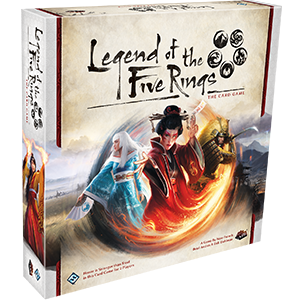
The Core Set shipped in October 2017 with 223 cards and seven playable clans, which is generous — most living card games launch with fewer factions and less to do with them. Each clan got a stronghold, a slice of a card pool, and one clear route to victory. The Emerald Dojo's collecting guide puts it neatly: at launch each clan had a single effective path, dishonour for Scorpion, movement for Unicorn, and so on down the list.

What the Core Set actually was

Here is the fact that reframes it. Twenty of those 223 cards were eventually restricted or banned — fourteen restricted, six banned outright.

That list includes Forged Edict, Charge!, Guest of Honor, Spyglass and Bayushi Liar on the banned side, and Display of Power, For Greater Glory, Rebuild, Niten Master, Mirumoto's Fury and Keeper Initiate among the restricted. City of the Open Hand, a stronghold, managed both — errata'd, restricted, then banned.

No design team gets a launch set perfectly calibrated, and much of that policing happened years later against a card pool six times larger. But the scale of it says something true: the Core Set was not a gentle introduction that later sets built on. It was, in several places, the most powerful printing the game ever had.

Playing with only this

A Core-only game is the purest version of L5R, and worth playing at least once. There is no restricted list to obey — the first one did not appear until May 2018 — so a Core deck can legally run Rebuild and Charge! together, which no tournament deck in the game's history ever could.

The clans feel enormously distinct here, more so than later. Shiro Nishiyama Crab simply refuse to lose a province. Shizuka Toshi Crane hold Voice of Honor and dare you to play a card. Isawa Mori Seidō Phoenix win rings rather than fights. The archetypes are one-note, and that is exactly what makes them legible.

The weakness is the same as the strength: with one path per clan, mirror-ish games happen fast, and the Unicorn path in particular was not yet good enough to compete. The Core Set is where Unicorn's reputation as the launch weakling was earned.

Worth knowing

The Core Set contains one copy of some cards and three of others, so a single box cannot build two decks at once. Three cores is the standard collection and every deck in this archive assumes it.

Sources. Emerald Dojo's collecting guide; Imperial Advisor's 2017 single-core deck articles. Card counts, dates and keyword tallies are computed from the archive database; the Banned & Restricted dates come from the dated history file, sourced from the L5R wiki and FFG's Imperial Law announcements.
Keep scrolling
November – December 2017 · 120 cards

The Imperial Cycle

Six packs in six weeks, and the densest concentration of trouble the game ever printed.

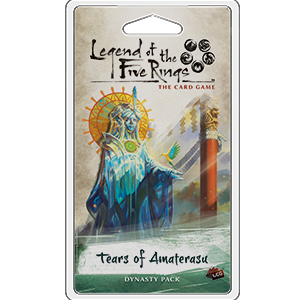
The first dynasty cycle ran November to December 2017 at a pack a fortnight — Tears of Amaterasu through Meditations on the Ephemeral — and its theme was the Imperial court. The Emperor, his advisors and the Imperial Favour all became mechanical concerns rather than background.

The numbers are extraordinary

Of 120 cards, eleven were later restricted and four were later banned. Proportionally that is worse than the Core Set. This one short cycle produced A Fate Worse Than Death, Bayushi Kachiko, Consumed by Five Fires, Cunning Magistrate, Embrace the Void, Iron Mine, Miya Satoshi, Pathfinder's Blade, Policy Debate and The Imperial Palace on the restricted list, and sent Karada District, Kanjo District, Master Of Gisei Toshi and Policy Debate to the banned list.

Two of those bans are district holdings — cards that sit in your provinces generating advantage every turn with no way to interact with them. That pattern recurs: the game's designers seem to have found unconditional holdings harder to cost correctly than almost anything else.

What it added

The Imperial Favour became a real resource. Kakita Yoshi cashes it for three cards. Ikoma Ujiaki turns it into total information. Censure cancels an event for free while you hold it, which quietly shaped deckbuilding for the rest of the game — every deck had to respect that a Favour-holding opponent might just say no.

The cycle also gave several clans their first genuine economy. Yasuki Taka turns Crab casualties into fate. Iron Mine saves a character for free and was restricted twice, in 2018 and again in 2020.

In hindsight

This is my read rather than a sourced claim, but the Imperial Cycle looks like a set designed before anyone knew how fast the game would actually play. Effects that assume a long game — accumulate the Favour, build the engine, cash it in — turned out to be available on turn two, and the restricted list spent the next three years catching up.

For a two-player kitchen table it is a wonderful cycle to build from precisely because of that. The cards are powerful and the games are eventful.

Sources. Imperial Advisor's Irish Kotei and Paris Grand Kotei coverage (early 2018). Card counts, dates and keyword tallies are computed from the archive database; the Banned & Restricted dates come from the dated history file, sourced from the L5R wiki and FFG's Imperial Law announcements.
Keep scrolling
June – August 2018 · 120 cards

The Elemental Cycle

Five rings, five provinces, and the cycle that taught the game what it was about.

After a gap of several months, the second cycle arrived in mid-2018 and did something the first had not: it made the five elements matter mechanically rather than decoratively.

Each pack carried a province tied to an element — Upholding Authority, Demonstrating Excellence, Abandoning Honor, Appealing to the Fortunes, Seeking the Truth — and they are so clean that decks in this archive still run all five as a set, three years of card pool later. Alongside them came the Mantras and elemental spells, and a general encouragement to care which ring you were fighting over.

A much cleaner set

Only four cards from this cycle were later restricted and three banned, against eleven and four from the Imperial Cycle. That is a big improvement over a comparable card count, and it suggests a design team that had watched the first year and adjusted.

The exceptions are instructive. Void Fist was restricted — a free kihō that sends a character home is exactly the sort of effect that scales badly as the pool grows. Magistrate Station and Hidden Moon Dōjō were eventually banned, and both are, again, permanents that generate value without interaction.

The strongholds problem

The cycle printed two strongholds with the same name. Hisu Mori Toride for Unicorn and Hisu Mori Toride for Lion do related but different things, and confusing them is a rite of passage. The Unicorn version — win a military conflict while outnumbering your opponent, get another military conflict — became one of the defining cards of the game and dragged the clan from worst to genuinely competitive.

The meta it made

Two archetypes from this period are worth knowing. Dragon's Test deck, which the Emerald Dojo credits with defining 2018, banked fate early and built one enormous character. And the Lion fort deck described in Imperial Advisor's Ten Orders article, which sacrificed its own characters to declare extra conflicts and ran provinces designed to punish anyone who attacked it.

Both are in the deck archive at tier 3, and they play against each other beautifully.

Sources. Imperial Advisor's “The Ten Orders” (July 2018) and Winter Court 2018 coverage. Card counts, dates and keyword tallies are computed from the archive database; the Banned & Restricted dates come from the dated history file, sourced from the L5R wiki and FFG's Imperial Law announcements.
Keep scrolling
April 2018 – December 2019 · 201 cards across 7 packs

The Clan Packs

Seven deluxe expansions, seven new strongholds, and a second identity for every clan.

Between April 2018 and December 2019, each clan received a deluxe expansion of its own: Disciples of the Void for Phoenix, Underhand of the Emperor for Scorpion, Warriors of the Wind for Unicorn, Masters of the Court for Crane, The Emperor's Legion for Lion, Defenders of Rokugan for Crab, and Seekers of Wisdom for Dragon.

The Emerald Dojo's guide describes the design intent directly: each pack introduced a new archetype for the featured clan to experiment with — shinobi tactics for Scorpion, swarm for Unicorn — alongside a general deepening of its card pool.

The structure nobody mentions

Each clan pack contains 28 unique cards, but only about 22 are usable by the featured clan. The rest are three copies of a card for each other clan, and the Dojo's guide notes these usually offer an efficient counter to the pack's own clan.

That is elegant design and a practical trap. It means "build a deck showcasing this clan pack" has a hard ceiling around 22 cards, because the remainder are dynasty cards for other factions and dynasty cards can never be splashed. Every clan-pack deck in the showcase archive runs into this wall.

The strongholds

This is where the clan packs earned their money. Seven new strongholds arrived, and several changed their clan permanently:

  • Kyūden Kakita honours a character every time you win a duel, turning Crane duelling from flavour into an engine
  • High House of Light readies Togashi Mitsu so he can send a character home every single conflict
  • Kyūden Bayushi readies dishonoured characters, rewarding Scorpion for the self-harm their cards already inflicted
  • Kyūden Isawa recycles a spell from your discard pile every turn
  • Kyūden Hida digs through your deck for a character, papering over Crab's dynasty-row problems

Not all of them landed. The Emerald Dojo's Unicorn primer is blunt that Shiro Shinjo remains a stronghold of potential rather than results, vulnerable in the early turns before its economy comes online.

Uneven by design

The clan packs are the most flavourful products the game made, and the least balanced against each other. Masters of the Court gave Crane a tournament-defining archetype; Defenders of Rokugan gave Crab six Kaiu Wall holdings that the community concluded were mostly a trap. Both are wonderful to build with. Only one of them wins games.

Sources. The Emerald Dojo's collecting guide, which describes the clan packs' structure and intent. Card counts, dates and keyword tallies are computed from the archive database; the Banned & Restricted dates come from the dated history file, sourced from the L5R wiki and FFG's Imperial Law announcements.
Keep scrolling
February 2019 · 82 cards

Children of the Empire

The first premium expansion, and the year the Imperial family fell apart.

The premium expansions were annual large-box releases tied to major story turns. Children of the Empire was the first, arriving February 2019, and it dealt with the fracture of the Hantei line — the Emperor's sons, the succession, and the murder that started it.

Composure

Its mechanical contribution was Composure: abilities that switch on when your honour bid is lower than your opponent's. Eight cards in the set carry it, and it is a genuinely clever piece of design, because the honour bid is the one resource both players set simultaneously and secretly every turn. Composure rewards restraint, and it made the draw phase a real decision rather than a reflex.

The Imperial family as cards

The set printed the Hantei family as playable characters — Hantei XXXVIII, Hantei Sotorii, Hantei Daisetsu — along with Akodo Toturi as a neutral. Putting the Emperor and his heirs in the card pool as neutral characters any clan could run is a nice piece of flavour: everyone is manoeuvring around the same succession crisis.

It also gave several clans their second-generation champions, including Kakita Toshimoko, who was restricted in January 2020 after duelling proved rather too good.

An unusually clean set

Only one card from Children of the Empire was ever restricted and one banned (Mirumoto Daishō), from 82 cards. Compare that with the Core Set's twenty and the Imperial Cycle's fifteen. By early 2019 the design team had the measure of the game.

That makes it one of the better products to build from casually. The cards are interesting without being oppressive, and the neutral Imperial characters give any clan a way to play in the story.

Sources. The Emerald Dojo's collecting guide on the premium expansions and their story role. Card counts, dates and keyword tallies are computed from the archive database; the Banned & Restricted dates come from the dated history file, sourced from the L5R wiki and FFG's Imperial Law announcements.
Keep scrolling
June – November 2019 · 130 cards

The Inheritance Cycle

Disguise, succession, and a cycle where the story did the heavy lifting.

The 2019 dynasty cycle followed the succession crisis outward from the Imperial capital into the clans. Six packs, 130 cards, and a keyword worth having.

Disguised

Disguise lets a character enter play on top of another character you control, taking its place. Eight cards in the cycle use it, and it is the most flavour-perfect mechanic the game produced: the person who has been standing in your court all along was someone else.

It is also mechanically sharp. A Disguised character dodges the fate cost, arrives ready, and — crucially — arrives at a moment of your choosing. The Emerald Dojo's Scorpion primer flags Shosuro Ibuki as a dynasty character who sits visibly in the row before revealing herself, which gives an alert opponent a chance to break that province first.

Bayushi Shoju

The cycle's most consequential card is the Inheritance version of Bayushi Shoju. The primer works through it line by line, and the summary is that it does four things at once: denies the opponent the Imperial Favour, drains an honour from each player every conflict phase, draws cards, and stands there with seven political skill that cannot be duelled militarily.

He was restricted, and the primer's verdict — that he terrorised the competitive meta until then — is about as clear as these judgements get.

A quieter set on paper

Only one card from the cycle was restricted and two banned, which understates its impact. The Inheritance Cycle's power was concentrated rather than spread: a handful of cards that reshaped their clans, surrounded by solid role-players.

Winter Court 2019 was played on this card pool, and the tournament decks in the archive are all from that event — the Worlds-winning Phoenix, the Kyūden Bayushi Scorpion, Aaron Frede's Unicorn swarm. If you want to know what the game looked like at its competitive peak, those six lists are the answer.

Sources. Winter Court 2019 decklists via Imperial Advisor; the Emerald Dojo's Scorpion primer on the Inheritance-cycle Bayushi Shoju. Card counts, dates and keyword tallies are computed from the archive database; the Banned & Restricted dates come from the dated history file, sourced from the L5R wiki and FFG's Imperial Law announcements.
Keep scrolling
February 2020 · 94 cards

Clan War

The multiplayer expansion, and the 13 cards you will never play.

Clan War is the strangest product in the run and the one your collection is most likely to have sitting untouched. It arrived February 2020 with 94 cards, and a substantial fraction of them do not function in a two-player game at all.

Support and treaties

The set introduced Support — roles that grant eight deckbuilding influence instead of the usual three, at the cost of locking your splash to a single named clan. Fifteen cards in the set reference it. It is a real deckbuilding lever: Common Cause and its relatives reward you for committing hard to one ally rather than dabbling.

Then there are the treaties. Thirteen cards in Clan War are treaty cards, and treaties only function in multiplayer Enlightenment games. In a two-player match they are simply unplayable. That is not a design failure — the set was explicitly building out a multiplayer format — but it does mean that a coverage report on a two-player archive will always show Clan War looking underused, because 14% of it is unreachable by definition.

The elemental temples

The best thing in the box is a cycle of five neutral provinces: Temple of Jikoju, Temple of Osano-wo, Temple of Daikoku, Temple of the Thunders and Temple of Shinsei's Wisdom. Each grows stronger as you claim rings. Running all five is a genuine archetype and a lovely visual on the table, and it is available to every clan.

Why it matters here

Until this archive was rebuilt on complete data, Clan War had 33% coverage — the worst of any product. It is worth deliberately building a deck around it, and the showcase archive now does that for every clan. The Support roles in particular change how a splash feels: eight influence is enough to run another clan's cards as a real second colour rather than a garnish.

Sources. The Emerald Dojo's game modes documentation. Card counts, dates and keyword tallies are computed from the archive database; the Banned & Restricted dates come from the dated history file, sourced from the L5R wiki and FFG's Imperial Law announcements.
Keep scrolling
March – September 2020 · 136 cards

The Dominion Cycle

Rally, battlefields, and the cycle that made the dynasty phase interesting.

The 2020 cycle is the most mechanically dense of the run. Three keywords arrive at once, and all three change how a turn feels.

Rally

Rally is the headline, appearing on twenty-six cards. A rally card, when it flips face-up in your provinces, does something immediately rather than waiting to be bought. It fills your board without spending fate.

This matters more than it sounds. The dynasty phase in L5R had always been a resource decision — spend fate, get a character — and rally turned it into a source of free tempo. It also made the province row a place where things happen, rather than a shop window.

Battlefields and Eminent

Battlefield attachments attach to provinces rather than characters, giving the game a positional layer it previously lacked. Lion took to them hardest: Prepared Ambush, Makeshift War Camp and Logistics together let you stage characters at a province and move them where they are needed.

Eminent provinces start face-up and are always available, trading surprise for reliability. Eight cards use it.

Four strongholds

The cycle printed Seven Fold Palace, Seven Stings Keep, Iron Mountain Castle and Hayaken no Shiro — an unusual number for a single cycle, and each one supporting a distinct archetype. Seven Stings Keep is the most interesting of them: your opponent must commit defenders before knowing what conflict they are defending against. The Emerald Dojo's Scorpion primer notes that it rarely saw competitive play, which I think is a shame, because it is the single best expression of that clan's identity in the game.

The policing

Two cards restricted, two banned, from 136. By 2020 the design was in good shape. The Wealth of the Crane and Lost Papers both got banned, and Contested Countryside and Doji Diplomat restricted — all four are cards that generate repeated advantage rather than one-off swings, which by this point in the game's life was the pattern the B&R list watched most closely.

Sources. The Emerald Dojo's rally-cards deckbuilding guide and October 2020 meta guides. Card counts, dates and keyword tallies are computed from the archive database; the Banned & Restricted dates come from the dated history file, sourced from the L5R wiki and FFG's Imperial Law announcements.
Keep scrolling
November 2020 – April 2021 · 130 cards

The Temptations Cycle

Dire, and the elegant idea of rewarding you for spending nothing.

The final dynasty cycle ran from November 2020 to April 2021, and its central mechanic is the best late-game idea the designers had.

Dire

A Dire character has an ability that only works while it has no fate on it. Fourteen cards in the cycle carry it.

Think about what that does. The entire game teaches you that fate is life: a character with no fate leaves play at the end of the turn. Dire inverts it. Your best characters are the ones you did not pay for, the ones about to die, the ones an opponent would not waste removal on. It made the fate phase — normally bookkeeping — into a real decision, and it gave every clan a reason to run characters they had previously ignored.

The Unicorn primer makes the point well: Dire finally rewarded Unicorn for what they had always done anyway, putting characters into play with no fate and accepting they would not last.

The clans get strange

The Temptations cycle leaned into its title. Dragon printed Perfect Land Believer and Militant Faithful — peasants who have rejected the clan's teachings. Crab printed the Damned. Scorpion printed Loyal Oathbreaker, who simply declares you the less honourable player regardless of the actual numbers, switching on an entire deck's worth of conditional cards.

There is a thematic coherence here that most card games never achieve: the cycle is about corruption and compromise, and the mechanics are about accepting a downside to get a benefit.

Two bans and no restrictions

Calling the Storm and Ki Alignment were later banned; nothing from the cycle was restricted. For 130 cards released in the game's final year, that is a clean record — and slightly academic, since organised play was winding down as it landed.

Both banned cards are engine pieces: Ki Alignment digs for the next kihō, chaining them together. Note that the dated ban list in this archive cannot pin down exactly when either was banned, only that it happened somewhere from January 2020 onward. The sheets flag them as banned later rather than pretending to a date.

Sources. The Emerald Dojo's Phoenix and Unicorn primers, both updated during and after this cycle. Card counts, dates and keyword tallies are computed from the archive database; the Banned & Restricted dates come from the dated history file, sourced from the L5R wiki and FFG's Imperial Law announcements.
Keep scrolling
May 2021 · 124 cards

Under Fu Leng's Shadow

The last release. The Shadowlands arrive as a playable faction, and the Wall does not hold.

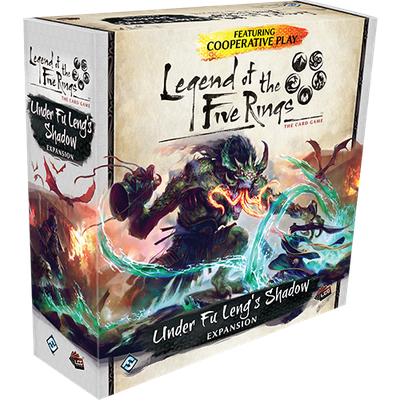
The final product arrived in May 2021 with 124 cards, and it is the boldest thing FFG printed for the game. Twenty-three cards reference Corrupted, twenty-three reference tainted, and the Shadowlands — the enemy the entire setting is built around holding back — becomes something you can play.

Corruption as a mechanic

Corrupted characters enter play tainted. The taint gives them power and takes something from you, and the set builds a whole economy around managing it: Jade Talisman and Jade Strike push back against corruption, Lurking Affliction and Unveiled Corruption spread it to the opponent.

What makes it work is that the clans get corrupted versions of themselves. The Crab cards in this set are the most affecting, because a Crab character who has taken the taint is the exact failure the clan exists to prevent. Four years of the Wall holding, and then this.

The Shadowlands faction

The set includes 76 cards belonging to a Shadowlands faction, for the co-operative and challenge variants the box supports rather than for standard two-player clan decks. They are in your card database and excluded from every deck in the archive, which is why coverage reports on this product will never reach 100%.

Two strongholds and a last word

Shiro Yogo for Scorpion and Twin Soul Temple for Phoenix are the last strongholds the game printed. Twin Soul Temple is the more interesting: it rewrites an element symbol on any card in play, which after four years of elemental design means it can bend nearly anything.

A note on evidence

This is the release I know least about. It landed in June 2021 as organised play was ending, the community sites that had covered every previous set were winding down, and I found no contemporaneous meta discussion of it at all. Everything above is drawn from the cards themselves rather than from anyone's account of playing with them.

That is worth stating plainly, because it is also why this set was missing from the archive's first build entirely, and why the showcase deck for it may be the least battle-tested thing here. It is a lovely, strange set, and as far as I can tell it barely got played.

Sources. Product listings and card data; contemporaneous community coverage of this release is thin. Card counts, dates and keyword tallies are computed from the archive database; the Banned & Restricted dates come from the dated history file, sourced from the L5R wiki and FFG's Imperial Law announcements.